Transitioning from a lecture hall to a high-stakes corporate boardroom is often viewed as a leap into the unknown. For many undergraduate students, the long hours spent researching, drafting, and refining assignments can feel like a purely academic exercise—a hurdle to clear for a degree. However, the reality is that the modern business world does not just value your diploma; it values the cognitive muscles you built while earning it. Every essay, case study, and project is a simulation of the strategic challenges faced by global executives.
The connection between a well-structured assignment and a corporate strategy is deeper than most realize. When you are tasked with analyzing a market trend or evaluating a historical event, you are practicing data synthesis. In the corporate world, this is called business intelligence. If you find yourself overwhelmed by the sheer volume of research required to bridge this gap, seeking professional support to do my assignment through Myassignmenthelp can provide a benchmark for how high-level academic content should be structured, allowing you to focus on the strategic takeaways rather than just the mechanics of writing.
The Architecture of Critical Thinking
Strategic planning in a multinational corporation requires the ability to look at a problem from multiple angles. Academic assignments force this exact behavior. Whether you are studying the impact of environmental regulations on trade or the psychological drivers of consumer behavior, you are learning to identify variables.
In a corporate setting, a strategist must predict how a competitor might react to a price change. This is no different from an undergraduate student anticipating counter-arguments in a persuasive essay. The ability to defend a thesis with evidence is the foundation of defending a multi-million dollar budget proposal.
Data Synthesis and the Power of Reporting
In business, data is useless unless it is communicated effectively. This is where the discipline of report writing comes into play. A CEO doesn’t want to read 50 pages of raw data; they want a concise executive summary that highlights risks and opportunities.
| Academic Task | Corporate Equivalent | Key Skill Developed |
| Literature Review | Market Research | Information Filtering |
| Methodology Section | Project Roadmap | Process Design |
| Data Analysis | Performance Metrics | Objective Decision Making |
| Conclusion/Recommendations | Strategic Pivot | Decisiveness |
Developing the ability to transform complex information into a readable format is a rare and valuable skill. Because business communication requires such specific formatting and tone, utilizing specialized report writing help at Myassignmenthelp ensures that you master the professional standards expected by top-tier firms. Learning the “anatomy” of a professional report early on gives you a massive advantage when you are eventually asked to draft a quarterly business review or a white paper for stakeholders.
Time Management: The Invisible Curriculum
Perhaps the most direct link between assignments and corporate life is the management of resources. A student juggling five modules, a part-time job, and social commitments is effectively a project manager.
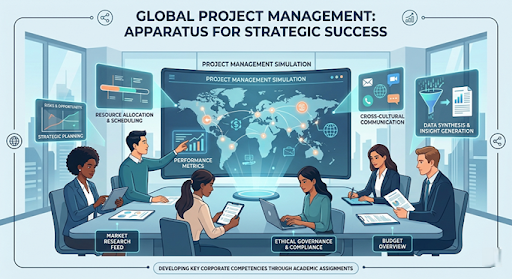
Corporate strategy is often limited by “The Triple Constraint”: time, cost, and scope. When you plan your assignment schedule to meet a Friday deadline, you are practicing resource allocation. In the global market, missing a “deadline” could mean losing a contract to a competitor or failing to launch a product during a peak seasonal window.
Collaboration and the “Team” Dynamic
Many undergraduate programs emphasize group assignments. While these are often the most complained-about tasks, they are the most accurate reflections of the corporate world. No major corporate strategy is the work of a single person. It is a symphony of input from marketing, finance, legal, and operations.
Learning how to navigate different personality types, delegate tasks, and merge different writing styles into a cohesive document is a fundamental leadership trait. If you can successfully lead a group of tired students to an ‘A’ grade, you are well on your way to managing a cross-functional team in a professional environment.
Global Standards and Ethics
In a globalized economy, “Academic Integrity” translates directly to “Corporate Governance.” Following citation rules and avoiding plagiarism isn’t just about following school policy; it’s about establishing a habit of ethical behavior. In the business world, misrepresenting data or failing to credit sources can lead to legal battles and brand ruin.
Writing for a global audience also requires a specific tone. It must be inclusive, clear, and free of local jargon that might confuse a stakeholder in another country. By practicing this “Global Tone” in your assignments, you are training yourself to communicate in the universal language of modern business.
Conclusion: Investing in Your Future Self
The next time you open a blank document to start a new project, try not to see it as a chore. View it as a draft for your future career. The research skills, the ability to synthesize data, and the discipline of meeting a deadline are the exact attributes that will make you an indispensable asset to any organization. Your assignments are not just about getting a grade; they are about building the strategist within you.
Frequently Asked Questions
1. Why is report writing considered more difficult than essay writing?
Ans: Report writing requires a more rigid structure, including headings, subheadings, and numbered sections. Unlike essays, which are often fluid and argumentative, reports are objective and designed for quick scanning by busy professionals.
2. How do academic assignments help with professional networking?
Ans: Many assignments require interviewing professionals or researching specific companies. This encourages students to reach out to industry experts, building a network before they even enter the job market.
3. Can I use the same writing style in business as I do in university?
Ans: While the critical thinking is the same, the style changes. Business writing is usually more concise and uses “active voice” to drive action, whereas academic writing can be more descriptive and theoretical.
4. Why is “Evidence-Based Writing” so important in corporate strategy?
Ans: In business, making a decision based on a “gut feeling” is risky. Strategic leaders use cited data, market trends, and historical case studies—just like students use academic sources—to justify their chosen path and minimize risk.
About The Author
I am Jack Williams, a dedicated academic strategist and lead content specialist at Myassignmenthelp. With over a decade of experience in higher education support, I focus on bridging the gap between complex university curricula and professional career readiness.